Contact Us


VV28 mission in a nutshell
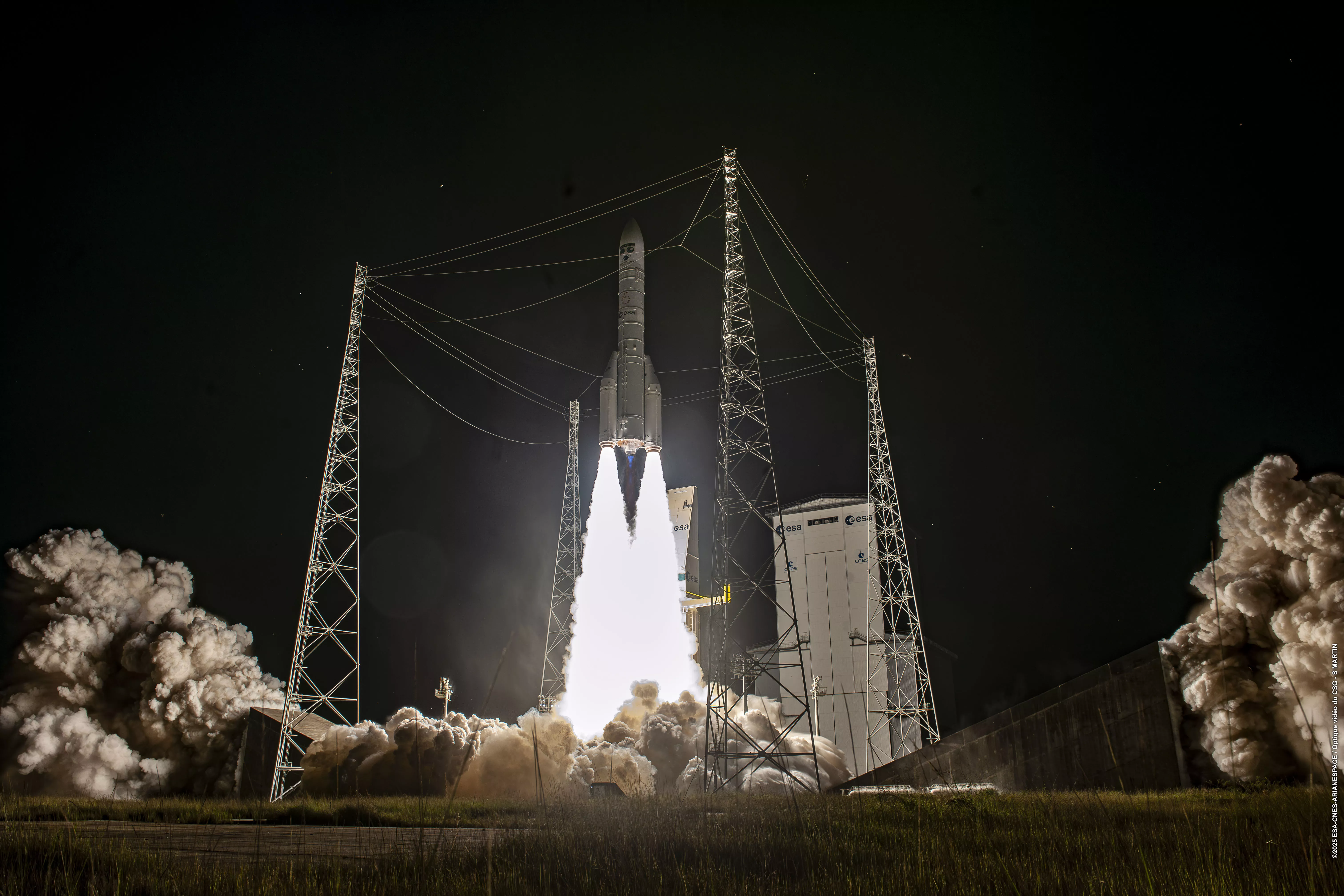
On December 1rst, 2025, Vega-C will place into orbit KOMPSAT-7 for the Korea Aerospace Research Institute (KARI).
VV28 in a nutshell
- Satellite : Kompsat-7
- Client : Korea Aerospace Research Institute (KARI)
- Mission : provide high-resolution satellite images to satisfy South-Korea's governmental and institutional needs
- Mass at launch : approx. 1810 Kg
- Targeted orbit : Sun-synchronous orbit (SSO) at an altitude of
approximately 576 km - H0 : 14h21 local time (17h21 UTC, 18h21 CET)
- Mission duration (from lift-off to the seperation of the satellite) : 45 minutes
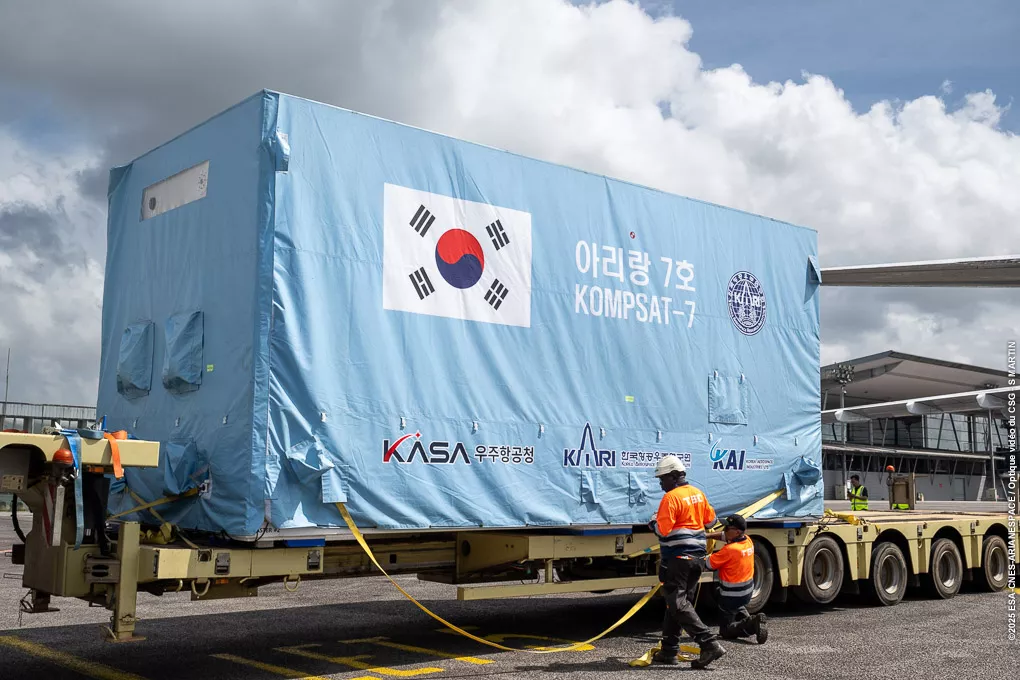
Kompsat-7 : an ultra-high-resolution optical satellite for South-Korea
The VV28 mission is the third launch for Vega-C in 2025.
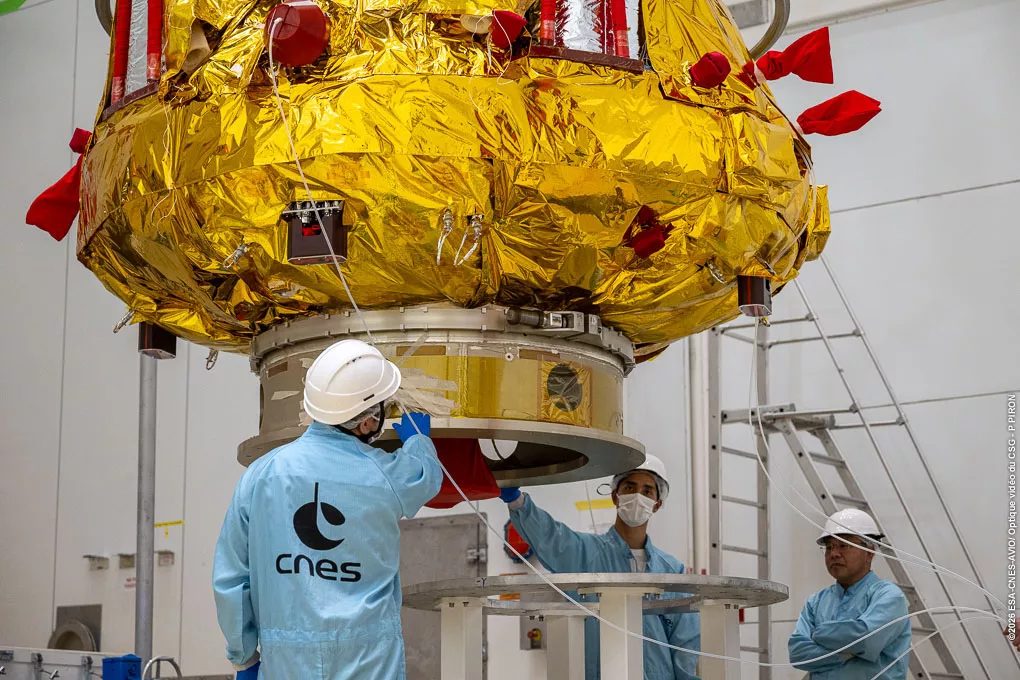
KOMPSAT-7 is the successor to KOMPSAT-3A (placed into orbit in 2015) and was developed to be one of the world’s most advanced ultra-high-resolution optical satellites. It is designed to support detailed observation of the Korean Peninsula and to meet the growing national demand for high quality satellite imagery.
The KOMPSAT-7 optical payload includes a highly precise optical system and adopts optical
data transmission technology - a first for a Korean satellite - to enable real-time processing of
large-volume Earth observation imagery via electro-optical modules and onboard
storage/processing systems. The system is equipped with more than one terabit of onboard
storage and utilizes high-speed parallel processing to enable real-time compression and
encryption, ensuring that large volumes of imagery can be transmitted to ground stations
within limited time windows.
To maximize the effectiveness of its ultra-high-resolution optical payload, KOMPSAT-7
incorporates a control moment gyroscope (CMG) for enhanced agility and features an onboard
computer that is over three times faster than those used in KOMPSAT-3A, significantly
improving attitude control performance. The ground image processing system applies
advanced parallel processing techniques, enabling it to complete first-stage geometric
correction and generate imagery within 15 minutes after receiving satellite data.
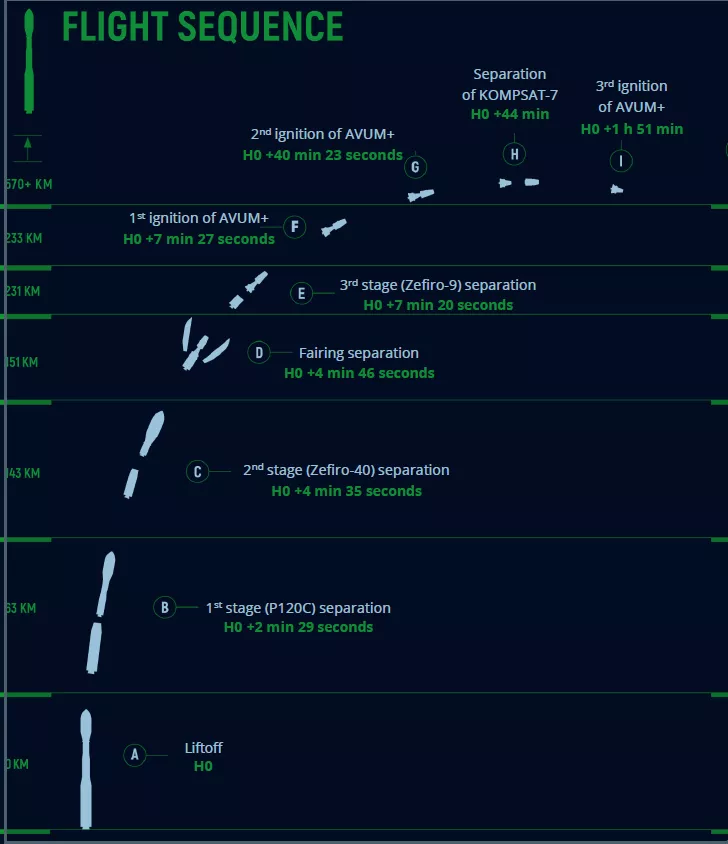
Flight sequence
The nominal duration of the mission (from lift-off to separation of the satellite) is: 45 minutes.
Seperation of KOMPSAT-7 : 44 minutes.
Dans la même rubrique
-
VA270 mission in a nutshell
25/08/2026Ariane 6 successfully launches 36 additional Amazon Leo satellites
17/06/2026SMILE in Orbit: VV29 Lights Up the Guyanese Sky
18/05/2026VV29: Final steps before lift-off
12/05/2026VV29 mission in a nutshell
11/05/2026Ariane 6 successfully launches another 32 Amazon Leo satellites
30/04/2026The first Ariane 64 successfully launches 32 Amazon LEO satellites